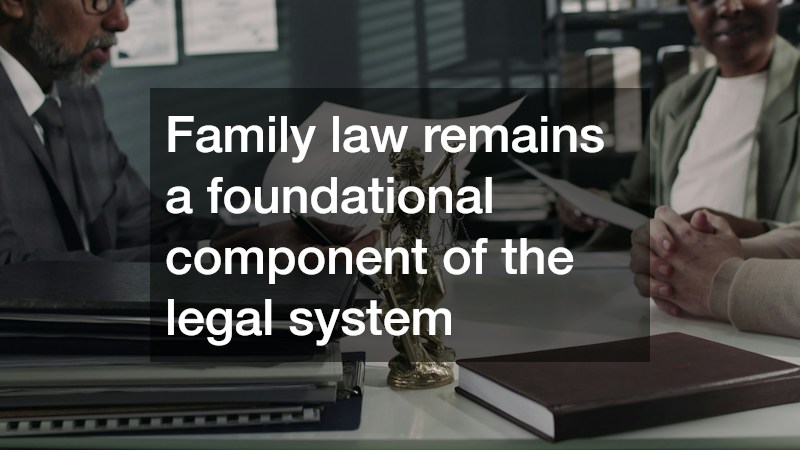
Family law is a vital facet of the legal system that governs relationships among family members, ensuring justice and equity. It is relevant today as it addresses issues ranging from marriage and divorce to child custody and support, adapting to the changing dynamics of modern families. The necessity of family law transcends mere legal regulations, providing a framework that reinforces individual rights and societal norms.
Understanding family law aids in recognizing its comprehensive role in mitigating familial conflicts. Thus, exploring what family law entails and its significance helps grasp why it remains indispensable.
Understanding Family Law: Definition and Scope
Family law is a specialized area within the legal field that primarily deals with matters revolving around familial relationships. Its scope is extensive, covering various issues such as spousal relationships, parental obligations, and children’s welfare. These laws not only address disputes among family members but also guide them through preventive measures to ensure harmony. Family law is both broad and intricate, as it involves different legal principles that vary from one jurisdiction to another. This complexity necessitates a clear understanding of its fundamental aspects.
Defining Family Law
At its core, family law is the segment of law that focuses on issues relating to family dynamics and relationships. It provides definitions for marriage, delineates the legal implications of divorce, and stipulates the responsibilities of parents and guardians. Often intertwined with emotion, family law ensures that legal processes are fair and that the involved parties reach amicable solutions. This branch of law promotes the welfare of children and protects the rights of vulnerable family members. As such, it acts as a mediator in familial matters, upholding justice within personal realms.
The Components of Family Law
Comprising several key areas, family law includes components such as marriage and domestic partnership norms, divorce, child custody and support, and property division. These components collectively address the various facets of familial relationships, offering legal guidance and dispute resolution options. Family law stipulates the dos and don’ts, ensuring clarity and reducing conflicts. Ensuring rights and obligations are upheld within the family unit, it is indispensable in structuring family interactions legally. Without it, disputes may escalate without formal resolution, leading to adverse social implications.
Who Practices Family Law?
The practice of family law is specialized, involving professionals such as family law attorneys, mediators, and judges dedicated to resolving family disputes. Lawyers in this field must navigate sensitive situations, providing guidance and advocacy to individuals facing marital or familial challenges. Successful family law practitioners require a balance of legal prowess and empathy to handle cases effectively. Besides legal professionals, social workers and counselors often support these processes, ensuring comprehensive care. Their collaboration ensures families receive not just legal advice but also emotional and psychological guidance through difficult times.
Common Types of Family Law Cases
The realm of family law encompasses a variety of cases that reflect the complex nature of familial relationships. Essential to understanding this is recognizing the legal procedures involved in divorce, custody disputes, and adoption processes. By categorizing these common issues, family law professionals can address them with targeted legal strategies. These cases highlight the ubiquitous nature of family law concerns in everyday life. This encapsulates the continuous need for specialized legal frameworks that adeptly address familial issues.
Divorce and Separation
Handled with sensitivity, divorce and separation cases constitute a significant portion of family law. These cases require careful negotiation of property division, alimony, and custodial arrangements. Family law aims to achieve amicable settlements that reflect the best interests of all parties involved, particularly children. Divorce proceedings are guided by statutes that ensure procedural fairness, assisting individuals in transitioning to new life phases. Thus, family law is instrumental in providing closure while paving the path towards balanced post-divorce situations.
Child Custody and Support
Child custody and support cases highlight the essence of family law’s protective role. These cases involve determining custodial rights and financial support, ensuring a child’s well-being. Family law thus becomes an arbiter that balances parental rights with children’s welfare, mitigating potential disputes. Legal frameworks assess various factors to decide the optimal custodial arrangement, maintaining the child’s best interests. Furthermore, it ensures accountability among parents regarding their childcare responsibilities.
Adoption and Guardianship
Adoption and guardianship cases underscore family law’s commitment to securing stable family structures for children in need. Facilitation of these processes through legal channels ensures that adoptive parents or guardians are prepared for their roles. Family law lays down stringent guidelines guaranteeing that adopted children receive care comparable to that of biological families. This enables children to transition into stable, nurturing environments seamlessly. As such, family law is a crucial enabler of new familial bonds and improved child welfare.
Family law remains a foundational component of the legal system, necessary for ensuring justice within familial structures. Its comprehensive scope addresses various individual and societal needs, enhancing stability and security. Understanding its role and importance underscores its irreplaceable value in promoting fair resolutions and protecting rights. As family dynamics evolve, the adaptability and relevance of family law continue to be critical for societal cohesion. Aided by skilled professionals, it continues to uphold the justice and integrity of family units, reinforcing its ongoing necessity.